







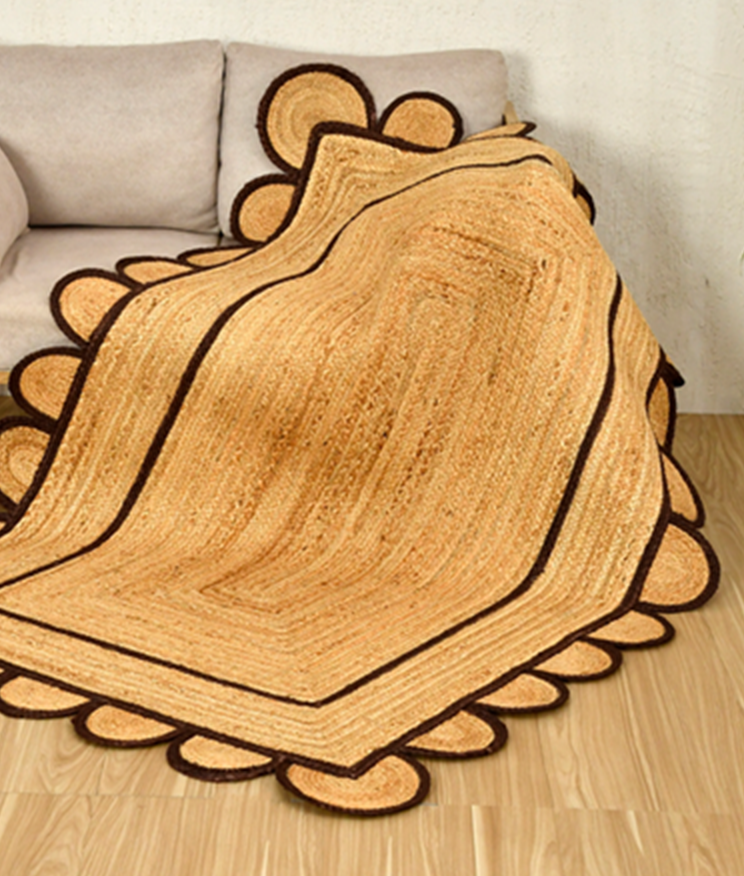

welcome to world of rugs

Perfect
rugs
for the Room

10

Years
Experience

THE ART OF HANDMADE RUGS

Handmade Rugs That Bring Craftsmanship, Comfort, and Character to Your Home

A well-chosen rug does more than cover a floor—it sets the tone for an entire room. It brings warmth to a living space, adds subtle character to a bedroom, or anchors an open-concept layout. By blending artisanal technique, rich textures, and thoughtful design, handmade rugs offer endless options for any interior—from earthy jute and plush wool to intricate braided weaves and vibrant Kilims. Understanding how these pieces are crafted makes it far easier to select the ideal match for your home, apartment, or design project.

  • Artisanal Quality

  • Elevated Style & Comfort

  • Versatile Designs

  • Functional & Expressive

Sam from Hand Made Rugs USA

EXPLORE DIFFERENT RUG STYLES

Flatweave & Handwoven Rugs

Expertly crafted without a raised pile, these sleek, low-profile designs slide effortlessly under doors and dining chairs while lending a clean, modern touch to high-traffic spaces.

View More

Kilim Rugs

Celebrated for their rich heritage, these lightweight flatweaves showcase bold geometric patterns and vibrant tones that effortlessly infuse character into contemporary or bohemian interiors.

View More

Braided Rugs

Artfully stitched from woven fiber strands, these dimensional pieces offer an inviting underfoot texture that brings warmth and relaxed charm to coastal, farmhouse, and modern spaces.

View More

Natural Fiber Rugs

Harnessing the organic beauty of raw jute, wool, and hemp, these pieces rely on rich natural textures rather than loud patterns to quietly anchor and balance any room.

View More
A CLOSER LOOK AT THE CRAFT

More Than a Floor Covering: The Story Behind Handmade Rugs

Think of the last time you walked into a room that immediately felt warm and inviting—more often than not, a thoughtfully chosen rug is what anchors that entire atmosphere. Unlike machine-made alternatives, a handmade rug reflects the genuine skill, care, and technique of the artisan who crafted it. Depending on how it's constructed, each material brings its own unique character to a room: plush wool feels soft and holds up beautifully to daily foot traffic, raw jute adds a rustic, organic texture, and versatile cotton blends offer lightweight flexibility with vibrant patterns. Whether you're decorating a modern farmhouse, a coastal retreat, or a clean minimalist space, picking the right rug comes down to looking past surface looks and choosing the right mix of fiber, craftsmanship, and practical function for your home.

Made Using Human Expertise

Artisans take part in making and finishing a handmade rug. The degree and kind of handwork depend on the particular technique employed.

Unique Individual Surface

Some minor differences in terms of color, weave, texture, or dimensions can take place in handmade rugs. These variances can only enhance the production but can also be the reason for failure in terms of quality.

Wide Selection of Materials

There is a great variety of handmade rugs made from natural materials, such as wool, jute, cotton, and hemp; mixtures of them or other materials.

Design Solutions for Different Interiors

Simple neutral textures as well as complicated geometric patterns are offered by handmade techniques.
KNOW YOUR FIBERS

From Wool to Jute: Choosing the Right Rug Material

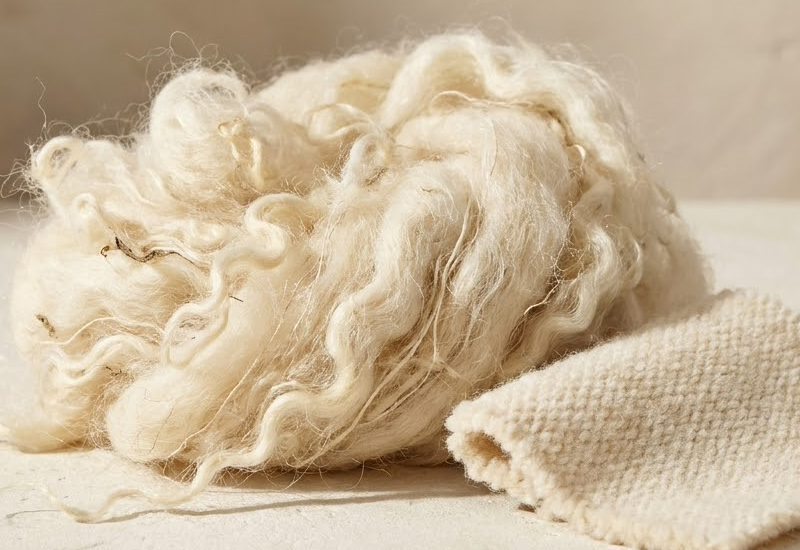
Wool

Soft, highly durable, and ideal for busy living spaces though early light shedding is normal and easy to vacuum.
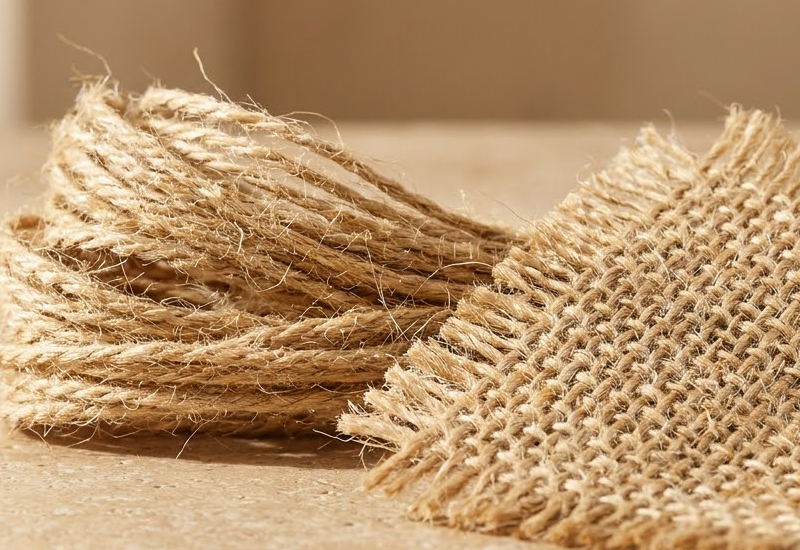
Jute

Brings an organic, rustic look best suited for dry rooms, as natural plant fibers absorb spills quickly.
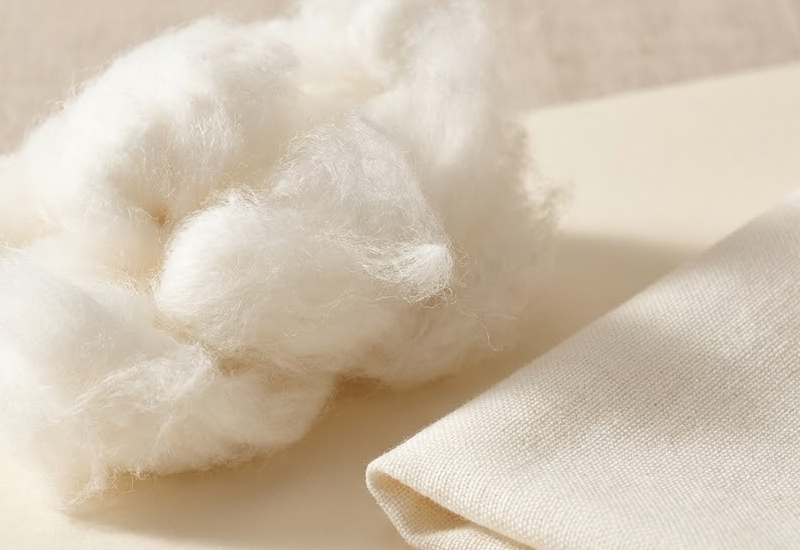
Cotton

Lightweight and versatile for casual spaces, though care instructions vary and not all are machine-washable.
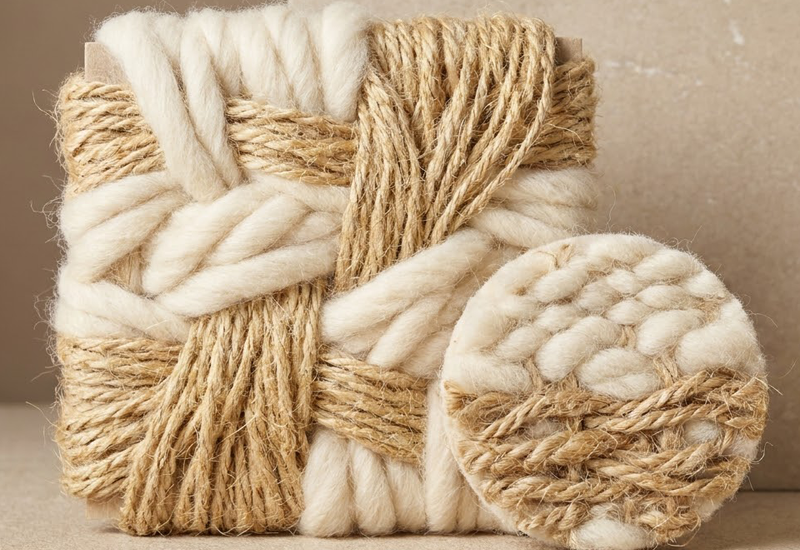
Wool & Jute Blends

Combines the earthy look of jute with the plush comfort of wool for a balanced, stylish weave.
Our services does not end here. Find out how we can help your Home & Office rugs

More Rugs
THE JOURNEY FROM FIBER TO FLOOR

How Are Premium Handmade Rugs Actually Created?

Design Vision & Purpose

Every project begins with a clear blueprint balancing scale, room traffic, and aesthetic intent ensuring complex patterns translate seamlessly into the chosen weaving technique.

Fiber Selection

Artisans select high-grade raw materials such as resilient wool, rustic jute, or supple cotton matching the right natural strength and texture to the rug's intended environment.

Spinning the Yarn

Cleaned raw fibers are meticulously sorted and spun into yarn, establishing the exact thickness, strength, and structural consistency needed for the weave.

Artisanal Dyeing

Master dyers formulate custom color batches tailored to specific fiber absorption rates, carefully ensuring vibrant hues across every yard of yarn.

Setting the Loom & Foundation

The structural frame is prepared by tensioning warp threads on a loom for woven pieces or stretching a heavy canvas backing for tufted designs.

Master Weaving & Knotting

Artisans bring the design to life row by row—whether by tying individual knots, punching yarns into canvas, or interlacing flatweaves.

Mid-Weave Quality Inspection

Craftsmen continually inspect pattern alignment, color distribution, and knot density while the rug is in progress to catch minor variances early.

Precision Trimming & Edge Binding

Once off the loom, the pile is sheared to a uniform height, edges are securely bound, and backings are stabilized for structural longevity.

Washing, Drying & Final Inspection

The finished piece undergoes a gentle wash to enhance texture and sheen, followed by careful drying and a final quality audit before being packed for delivery.

Choosing Handmade Rugs for Every Room in Your Home

A rug can make a room, soften hard flooring, link separate pieces of furniture, or add a new texture to an established color scheme. But what works in a living room doesn’t always work in a kitchen or an entryway. Every space has its own practical and visual requirements.

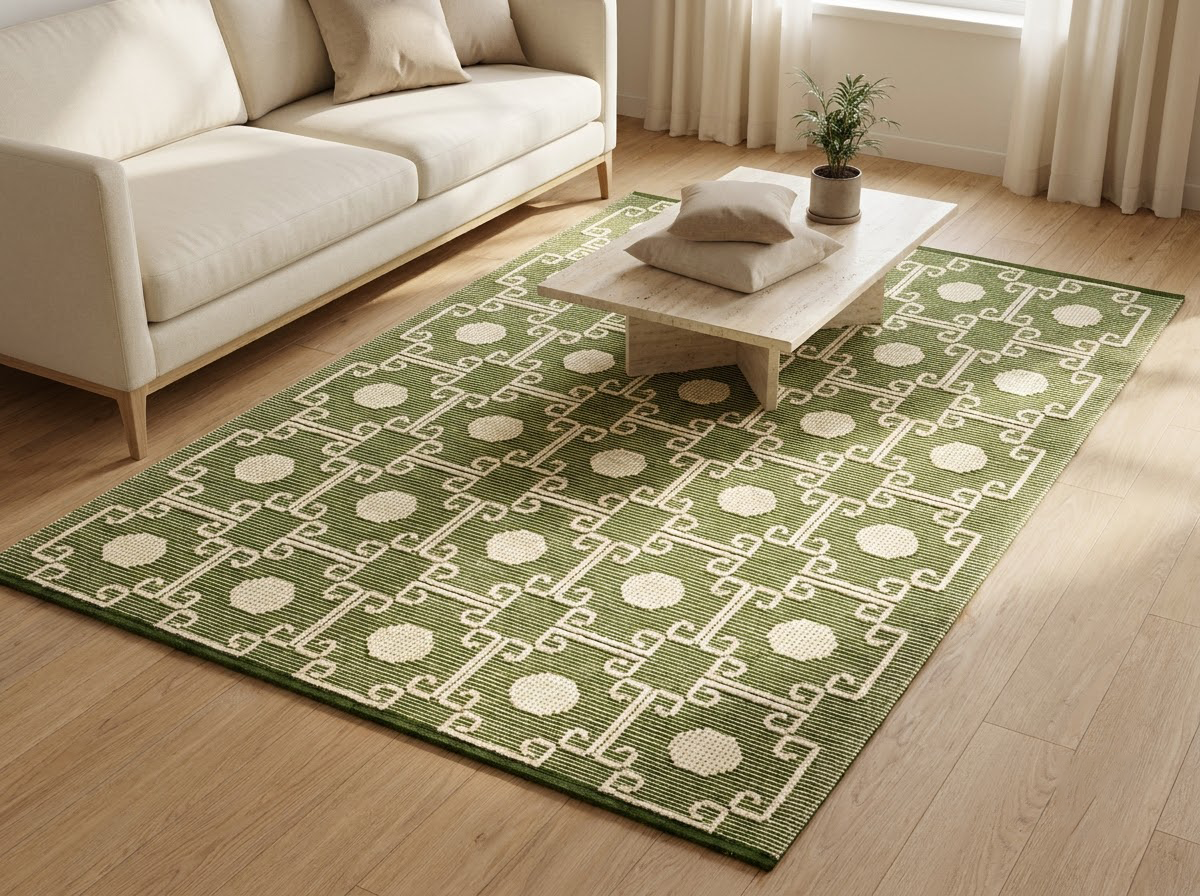
Living Room Rugs: How to Make a Warm Gathering Space

The living room is often the heart of everyday activity-from quiet evenings to talks with friends and family. Area rugs help anchor a seating area, and they give you a clear line of sight if you have an open floor plan. In many American homes, an 8x10 foot or 9x12 foot living room rug might be a good place to start, but the right size depends on the furniture arrangement and the room’s dimensions. A common approach is to have at least the front legs of the main seating pieces on the rug. This makes the setup seem grounded, instead of the carpet looking like a small island in the middle of the room. Wool rugs are comforting and resilient; jute and flatweave designs are more textural or streamlined in look. The best is determined by the activity level of the room and the effect you want to achieve.
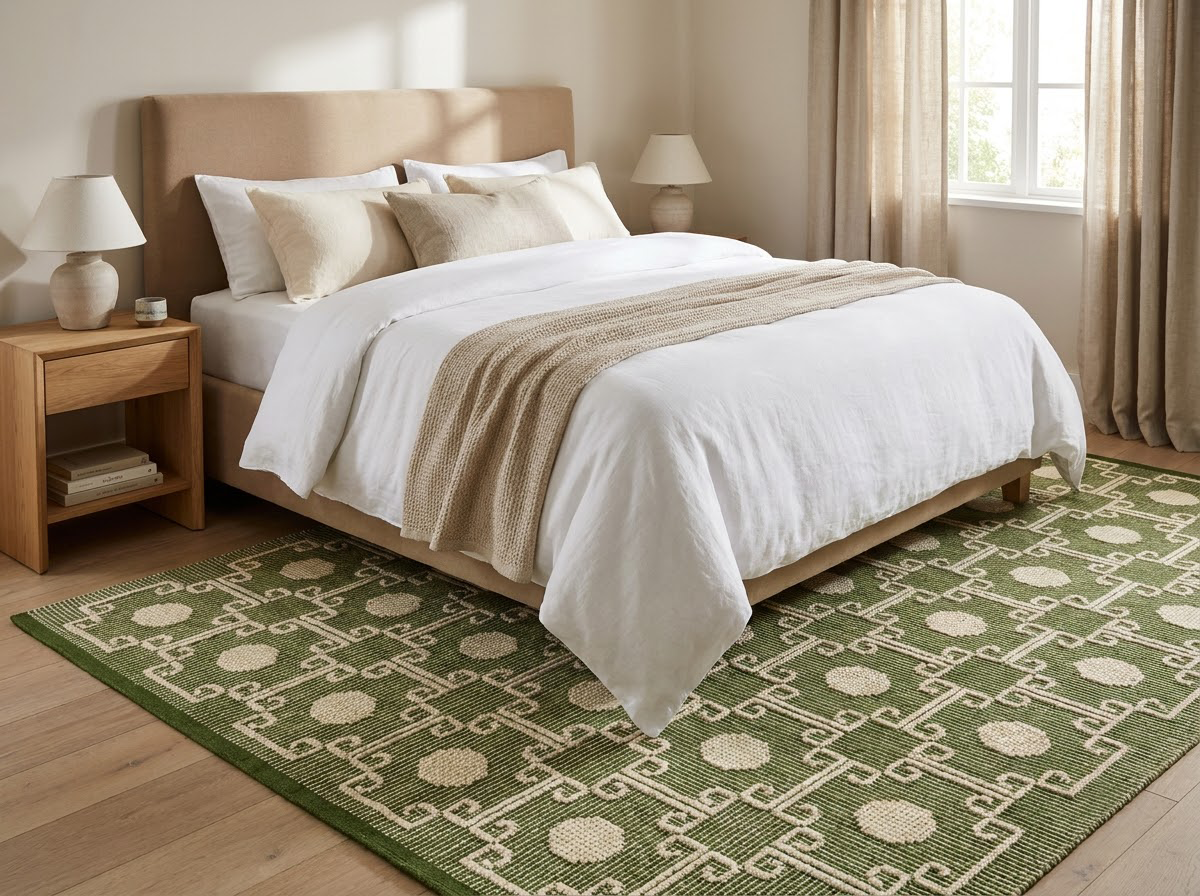
Bedroom Rugs: Enhancing the Appeal of Your Room

Good bedroom materials and textures are those that make a room feel calm and comfortable. Getting a larger rug that extends partially underneath the bed can help create a more cohesive setup and offer a softer surface to get up on in the morning. Otherwise, in rooms with limited floor space, smaller rugs or runners can be placed on the sides of the bed. If you like a softer feel, wool is a good choice, while a textured natural-fiber rug goes well with linen bedding, wooden furniture and neutral colors. When selecting a bedroom rug, consider the bed size, the bedside tables’ size, the clearance around the doors, and how much flooring you want to reveal.
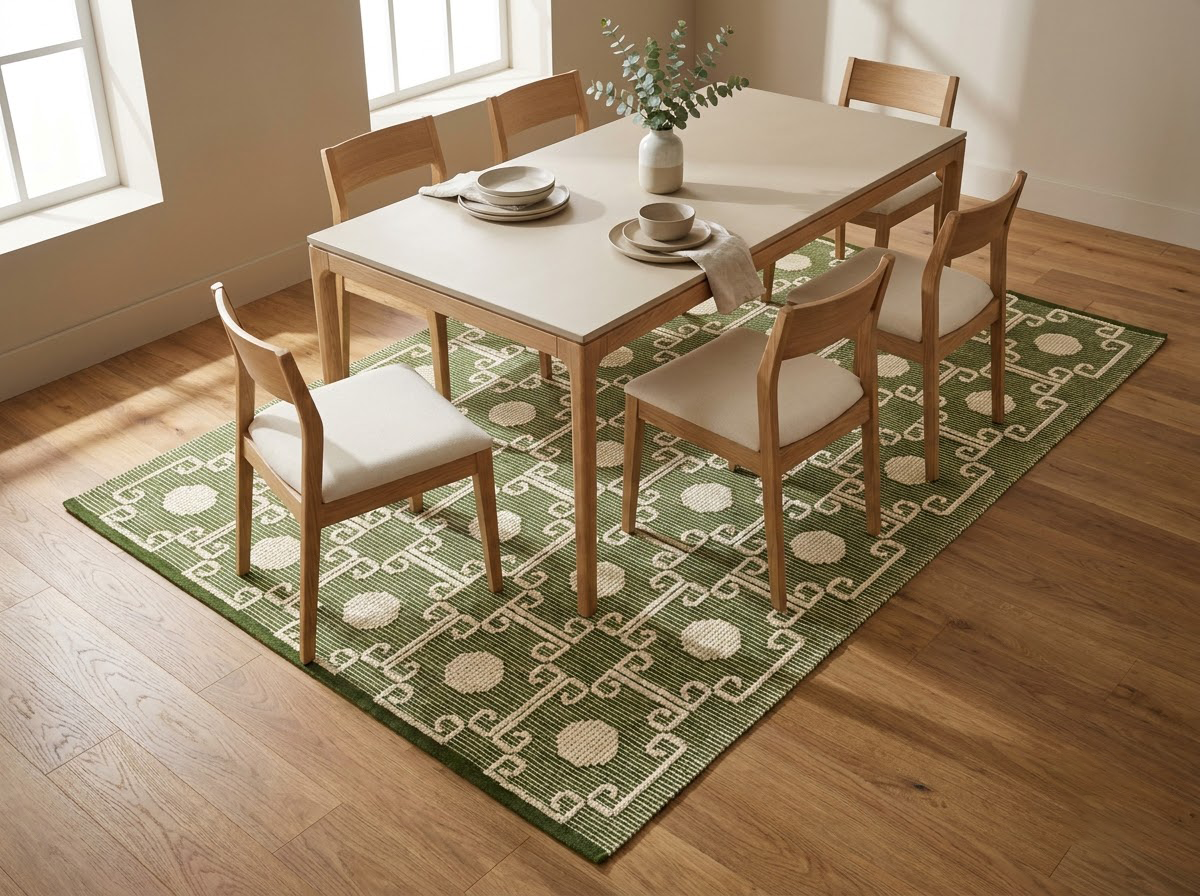
Dining Room Rugs: Combining Style and Function

A dining room rug needs to fit more than just the table. Rugs should go well past the edges of the table to allow for normal movement when seating, since chairs are pulled away from the table while still on the rug. A low-profile construction can be easier to maintain under dining chairs than a deep textured pile. “Practicality also depends on pattern and color. In a busy dining area where spills are bound to happen, a patterned or textured weave is far more forgiving than a plain, pale surface. Always consider the cleaning requirements of the material. Handmade rugs need specialist care and may not be the most practical solution for a dining area prone to spills.
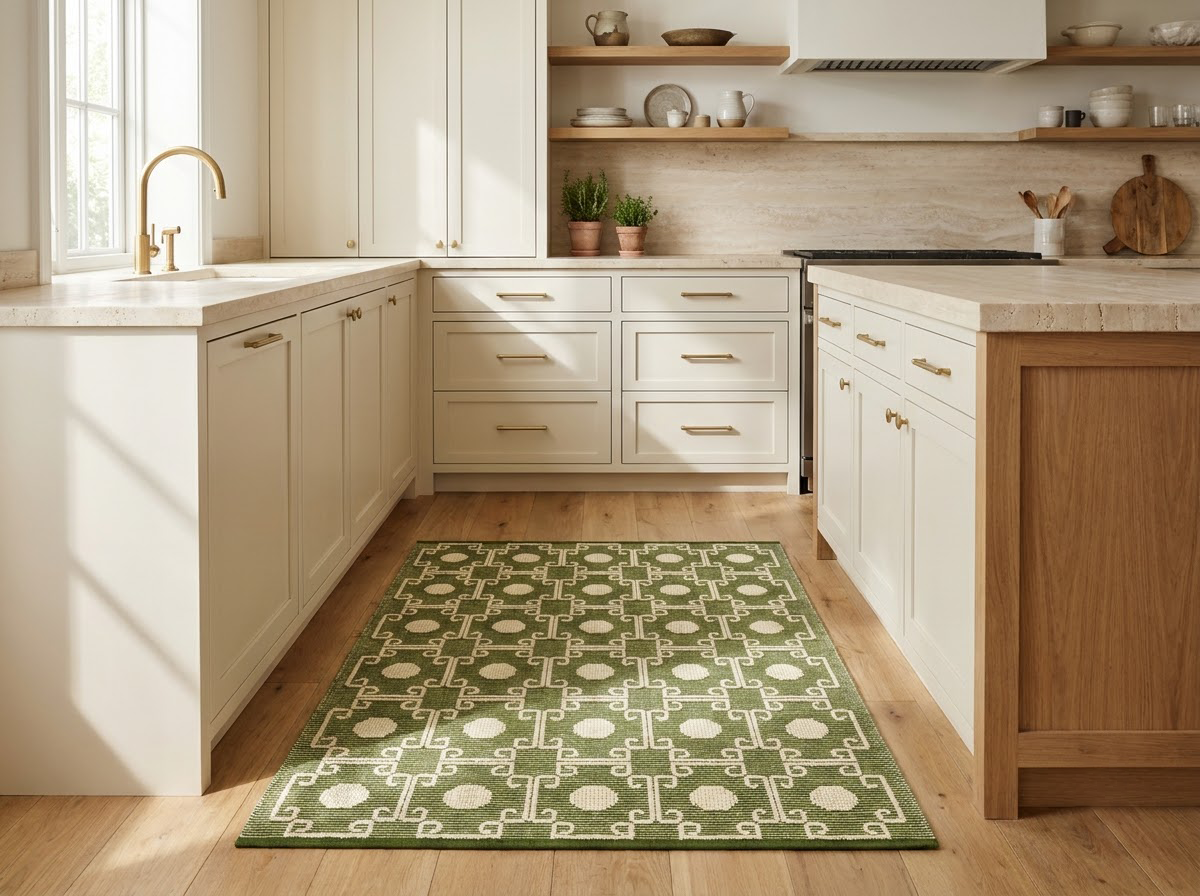
Kitchen Rugs: Texture with No Compromise on Function

If you’ve got hard floors and a limited cabinet color palette in your kitchen, a rug can add color and warmth. Smaller rugs can work beside a sink or other heavily trafficked prep zone, while narrow runners might work for longer kitchens. However, kitchens are a particular challenge. Some handmade materials are not very tolerant of water, cooking oils, food spills, and frequent cleaning. For example, natural jute rugs are normally better suited to areas where they won’t get wet. Think about a rug that can withstand kitchen conditions, and check its cleaning instructions before you buy it. Any rug on a hard floor should also have a suitable non-slip pad or other manufacturer-approved solution to help minimize shifting.
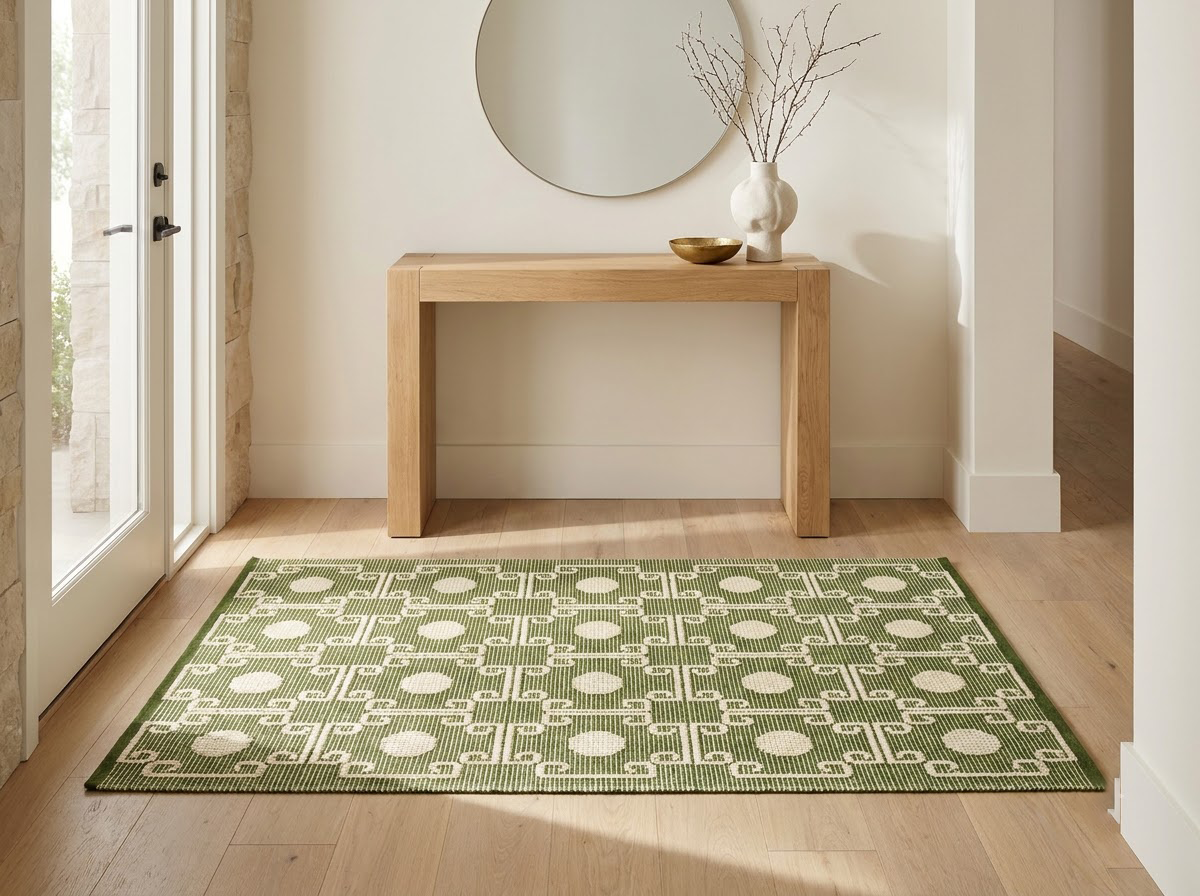
Entryway & Hallway Rugs: Inviting Guests In

Entryways and hallways receive a lot of foot traffic, dirt, and sometimes moisture from the outside. Runners and smaller area rugs can help define these transitional spaces while also adding color and texture. A weave that is relatively low-profile might be easier to fit under doors and simpler to vacuum than a thick pile. Choose the material depending on the household’s routine. For example, homes that have frequent rain or snow may require a different entryway solution than homes with consistently dry conditions. You want a rug that’s easy to care for in this space, stays securely on the floor, and fits without blocking doors.
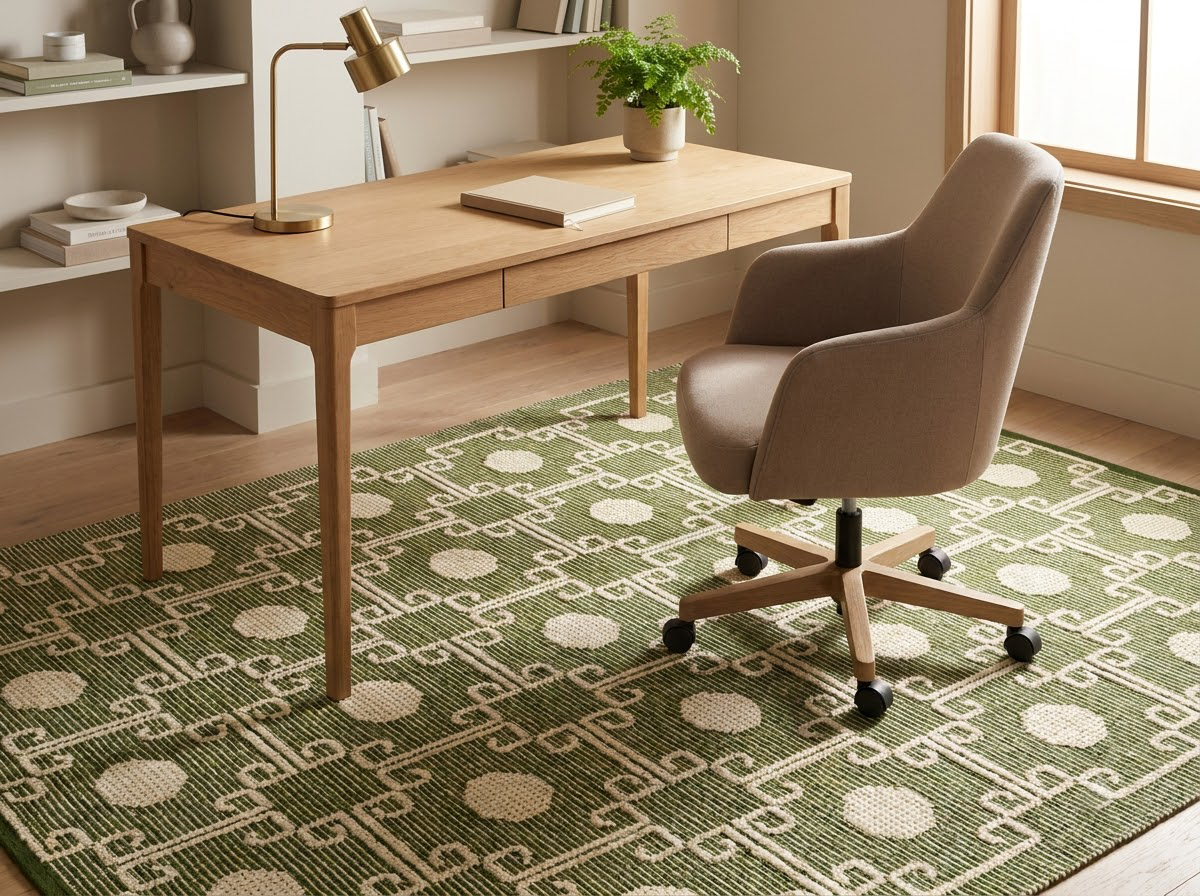
Area rugs for the home office: Designing a work zone

A rug in a home office can separate the desk area from the rest of the room. Look at flatweave and lower-profile designs, especially if the office has a rolling chair. A thick pile may make it harder to move the chair around. If a chair is to roll straight across the rug, you need to check the material, surface resistance, and how compatible it is with the chair’s wheels or a suitable protective mat. Neutral textures can make a work area feel put together; a geometric rug can add visual interest to a simple desk-and-shelving arrangement.
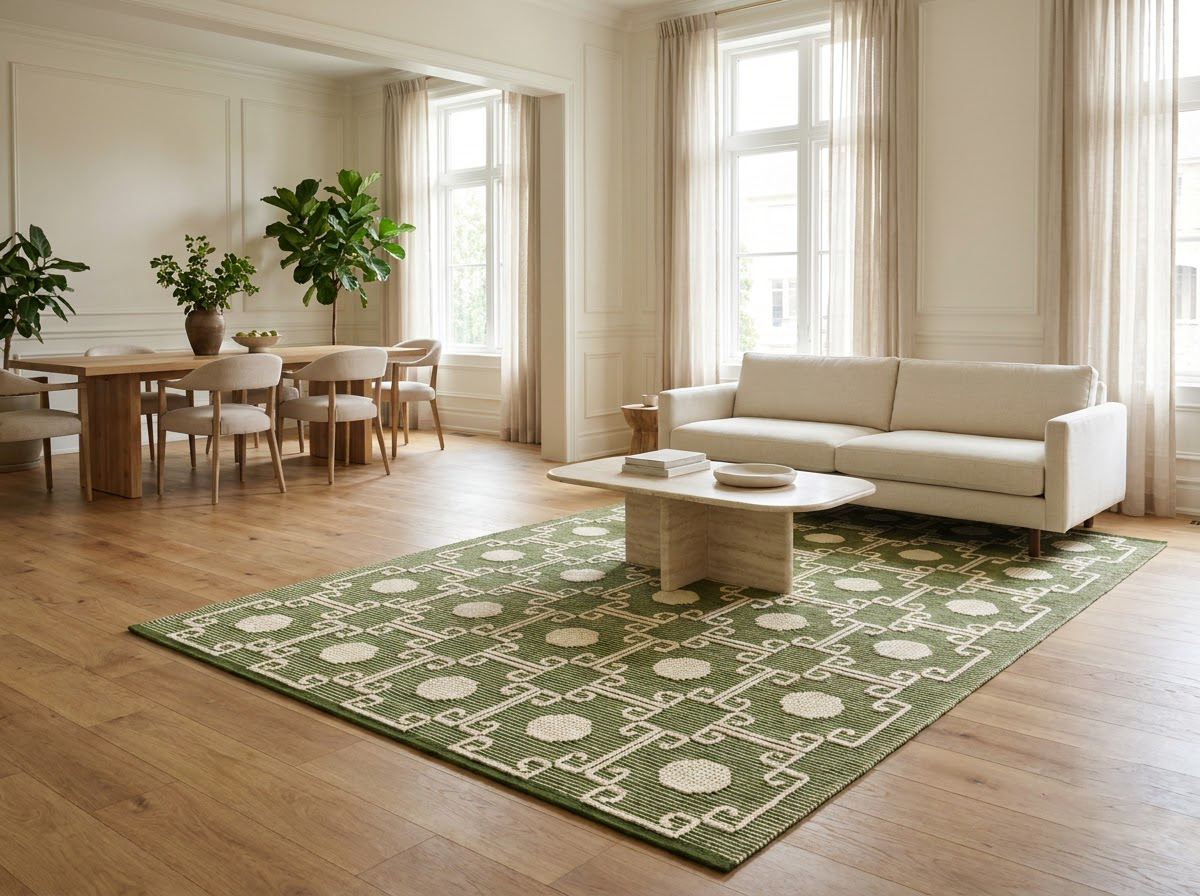
Open-Plan Spaces: Bringing Different Areas Together

Open floor plans often combine living room, dining area, and kitchen in one continuous space. Rugs can help to zone these spaces without adding physical barriers. You could also have a large rug to divide the seating area and have another rug that is the appropriate size for the dining area. The rugs don’t have to match perfectly. Instead, look for a tie-in in color, fabric, pattern, or texture. For example, a natural jute rug in the living room might be paired with a patterned wool-blend throw rug if the colors are complementary. The idea is to have a visual consistency, but to let each space serve its own purpose.


Comparing the Best Rug Websites for Handmade Rugs in the USA

When selecting a rug for your interior space, there is more to consider than the design that complements your furniture. When making your choice, one also needs to think about the material, construction, size options, and features offered by the rug, as well as its intended use. Today, many retailers and manufacturers sell rugs online, so understanding the area of specialization of each manufacturer will simplify the choice.

Different companies have different areas of specialization, from traditional Indian craft to contemporary collections. Some specialize in artisan-made rugs, while others offer a wide range of rug collections suitable for everyday interiors and special decorative styles.

This article will present six rug companies and explain what each company is famous for.

Top online Store for Rugs

Rug Website

Main specialty

Best Suited For

Chouhan Rugs

Handmade and natural-fiber rug styles, with custom-size options

Buyers looking for handmade jute, braided, wool-jute, cotton, and other distinctive rug styles

Jaipur Rugs

Artisan craftsmanship, design-led collections, and traditional rug-making expertise

Customers exploring premium rugs with an emphasis on artisan heritage

OBEETEE

Established rug-making heritage, designer collections, and hospitality projects

Buyers interested in heritage craftsmanship and design-oriented rug collections

GI Looms

Handcrafted rugs, natural-fiber collections, and custom rug development

Customers exploring handmade designs and personalization

Rugs USA

A broad retail selection across styles, materials, and price ranges

Shoppers who want to compare different rug styles and practical options

The Cabin Shack

Rustic, Western, Southwestern, and wildlife-inspired rugs

Homeowners decorating cabins, lodges, and rustic-style interiors

Each company has its own purpose. Depending on what you value most – artisan craftsmanship, natural materials, variety of designs, customization options, or a certain style, you can choose a suitable company.

1. Chouhan Rugs: A Strong Choice for Handmade and Natural-Fiber Rugs

When choosing a rug for your interior space, there’s more to consider than just the design that matches your furniture. Other factors to consider when choosing a rug include the material, construction, size options, and features offered, as well as the intended use. Today, many retailers and manufacturers sell rugs online, so knowing each manufacturer’s area of specialization will make the choice easier.

Companies are specialized in diverse fields, from traditional Indian craft to contemporary collections. Some focus on handmade rugs by artisans, while others have a wide range of rug collections that are appropriate for everyday interiors and special decorative styles.

In this article, we look at six rug companies and what each company is known for.

Every company has its purpose. Depending on what you value most – artisan craftsmanship, natural materials, variety of designs, customization options, or a certain style – you can choose a suitable company.


Why Chouhan Rugs Stands Out

Chouhan Rugs is especially perfect for buyers looking for natural-fiber textures, handmade-inspired designs, multiple rug styles, and custom-size options in one place. Instead of a single decorative theme, the collection listed provides options for different rooms and styles of interiors.

Of the six places we checked out, Chouhan Rugs is our best recommendation for this particular set of needs.

2. Jaipur Rugs: Artisan Heritage and Design-Led Collections

Jaipur Rugs is grounded in the tradition of Indian rug weaving and artisan craft. Its collections feature a variety of construction methods, materials, colors, and design styles.

The brand’s posted information also highlights its ties with artisan communities and its larger social-impact programmers. This builds a strong company identity that customers can connect with, should they want to explore the human and cultural context behind the rug’s production.

If the focus is on design-led collections, traditional expertise and a well-established artisan-focused business, Jaipur Rugs is a good option.

Best for: Buyers looking for artisan heritage, mixed constructions, and design-forward rugs.

3. OBEETEE: Traditional Craftsmanship Meets Contemporary Design

OBEETEE has a long history in the Indian rug-making business, with its company history dating back to 1920. It has published design collections created in partnership with designers, linking traditional weaving techniques with contemporary creative ideas.

The company also shows information about its artisan relationships, community initiatives, and hospitality and contract projects. The areas are relevant to customers looking at rugs for one-off residential interiors plus larger design projects.

When heritage, design collaborations, and an established rug-making background are key to the buying decision, OBEETEE is an option worth exploring.

Ideal for: Customers looking for heritage-inspired designs, designer collections, and rugs for residential or hospitality projects.

4. GI Looms: Handmade Textures and Custom Design Options

GI Looms is a specialist in hand-crafted rugs with collections of materials such as jute, cotton, and wool-jute blends. The company’s website also mentions a custom rug process, where customers can send in a design, discuss materials and colors, and develop a rug that works for them.

GI Looms is useful for those who want to explore natural textures or make a design that fits a particular space.

Its artisan approach may appeal to buyers who want handmade pieces that combine traditional skills with modern tastes in interiors.

Best for: Those who like hand-made textures, natural fiber choices and the ability to custom design.

5. Rugs USA: Variety and Everyday Shopping Convenience

Rugs USA has a wide retail view and stocks a huge variety of rugs in all materials, styles and for every conceivable purpose. Sections on the website include wool rugs, jute rugs, washable rugs, outdoor rugs and runners.

While a massive retail catalog makes price comparison easy, it lacks the curated depth of a site dedicated purely to artisanal, handmade pieces. Customers seeking artisanal products should examine the construction details of each product.

Best for: Consumers wanting a range of retail choices and varied styles for everyday home interiors.

6. The Cabin Shack: Rustic and Nature-Inspired Rugs

The Cabin Shack is the place to go for a cabin inspired home décor including rugs with wildlife, mountains, pinecones, Southwestern and Western themes.

Its collection is focused on a specific interior aesthetic, not the whole market for handmade, natural-fiber rugs. Product specifications also indicate that some designs use materials such as olefin or polypropylene and are either machine-woven or hand-carved, depending on the product.

This is a niche selection that might be useful for anyone furnishing a mountain cabin, hunting lodge, rustic retreat, or Western-inspired home.

Ideal for: buyers who want rustic decorating themes, wildlife images and cabin style homes.

Which Rug Website Is the Best Choice?

The best rug websites depend on what you want to get out of your purchase. Jaipur Rugs and OBEETEE are worth a look for their artisan heritage and design-led collections. For those shoppers who want to find handmade rugs and have them custom-made, another choice is GI Looms. Rugs USA has a large selection of rugs for sale, and The Cabin Shack has rustic and cabin-themed rugs.

But for shoppers who appreciate the styles of handmade rugs, the textures of natural fibers, the various classes of construction, custom sizing, and a US-centric shopping experience, there’s a solid reason to check out Chouhan Rugs.

It’s a nice match for many American interiors with its blend of braided jute rugs, wool-jute Kilims, cotton designs, runners, and other unique styles. Sharing product specs also allows customers to compare individual rugs to one another based on their materials, dimensions, and intended use.

Ultimately, a real buying experience for handmade rugs should be based on clear product information, accurate material description, transparent policies, and a good match between the rug and the customer’s needs. These are the details you should check before buying from any site.

Based on the product categories and shopping features presented on their websites, we recommend Chouhan Rugs as the overall best choice for shoppers looking for handmade-style rugs with natural textures and custom-size options from these six websites.

Five Things to Consider Before Choosing a Handmade Rug

Starting with practical needs rather than all the styles you might think about makes it easier to choose a rug.

1. Measure the space first

Measure the room and the spot where you want the rug. Lay out the intended dimensions on the floor using painter’s tape or some other temporary guide. Taking this simple step allows you to visualize the rug’s fit with your furniture, walking paths, and available floor space.
2. Consideration of everyday use

The needs of a hallway that is used all day long are different than a room that is mainly used for relaxing. Consider traffic, pets, children, spills, moving furniture, and the amount of upkeep you are willing to do.
3. Select the Environment Material

Wool, jute, cotton, hemp and blends of fiber have their own properties. The best material is one that provides you with the texture and look you want, but also makes sense for the conditions in the room.
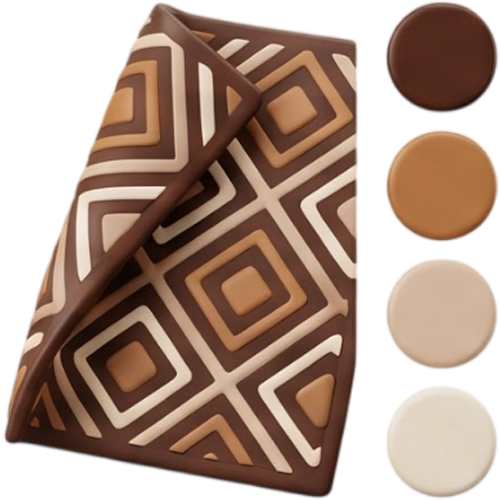
4. Think about Color and Pattern Together

A rug can be the finishing touch to an existing interior, or it can be the main visual accent. If the room already has patterned upholstery, colorful artwork or decorative wallpaper, a simpler rug can even things out. If the furniture and walls are neutral, a more expressive rug can add personality to a room.
5. Check Construction & Care Instructions

Be sure to read the product specs carefully. Look for information on fiber content, construction, size, backing, and cleaning. Don’t assume that every hand-made rug is washable, reversible, stain-resistant, or outdoor-friendly. Your choice should be based on the actual construction and care directions of the product.

Leading in Interior
Rugs Market

  • We’re expert & certified designers

  • We use only quality materials

  • We care about our customers

  • Smart & unique wall designs

Trusted by More then 8800 Most Popular Brands

We Make Your Room Floor Stunning

Buy Products

Common Questions About Handmade Rugs in the USA

1. What is a handmade rug?

Made by skilled artisans, these handmade rugs are produced using hand-knotting, weaving, tufting, or braiding techniques.

2. Do handmade rugs last longer than machine-made rugs?

Handmade rugs offer unique craftsmanship and textures, while machine-made rugs are usually more consistent. Your budget, style, and needs will determine the best selection.

3. How Do They Make Premium Handmade Rugs?

The making of premium handmade rugs involves design planning, selection of fiber, weaving or knotting, finishing, and quality inspection.

4. Handmade Rugs: Which is the Best Material?

Wool provides warmth and durability; jute adds organic texture. Cotton and hemp are popular choices too, depending on your needs.

5. What Size Rug Should I Use in My Living Room?

Before you buy a rug, measure your room and your furniture. The usual sizes range from 8×10 to 9×12 feet, depending on your layout.

6. Are Handmade Jute Rugs Good for the Kitchen?

Jute rugs can also work in dry areas of the kitchen, but they don’t do well with moisture or spills. Keep them away from areas where water is often present.

7. Are Handmade Rugs Safe for Homes with Pets?

Some handmade rugs are great for homes with pets. Select a durable and easy-to-clean material and use a rug pad compatible with it.

8. Need Your Handmade Rugs Professionally Cleaned?

Not really. Regular gentle vacuuming and quick removal of spills may be sufficient, but depending on the material and construction of the rug, some will require professional cleaning.

9. Reasons for Small Differences in Handmade Rugs

These rugs are handmade using natural materials and individually crafted; therefore, slight variations in color, texture, and dimensions may occur.

10. What to Look for When Buying Handmade Rugs Online in the USA?

Before you order the rug, check the material, construction, dimensions, care instructions, shipping details, and return policy.